
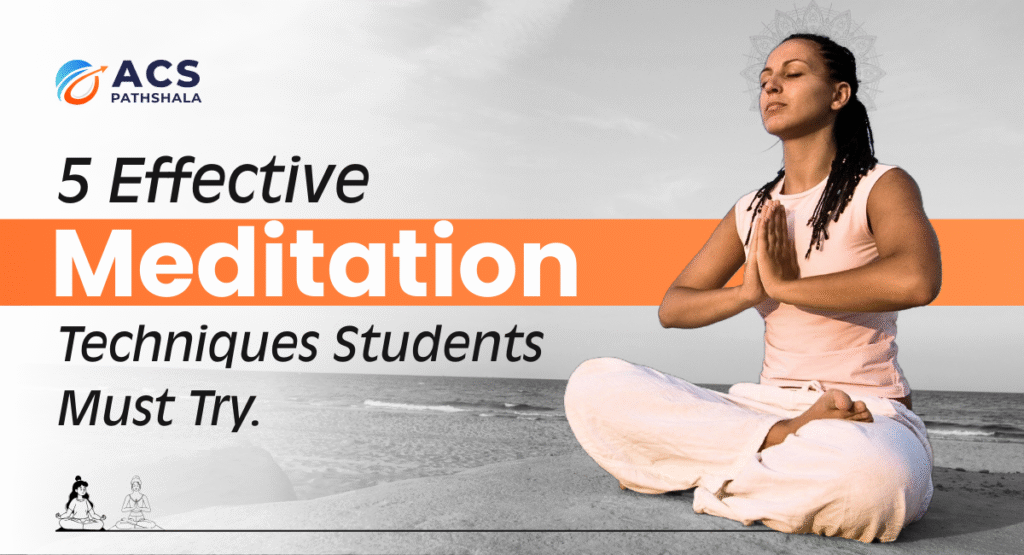
5 Effective Meditation Techniques might transform the thinking, learning, and life of students. Meditation is not a moment of silence; it is a skill that builds concentration, serenity, and inner strength. In youngsters, it is a tool for guiding that keeps the mind clear, minimizes stress, and improves recall as well as creativity.
These meditation techniques for students are simple to learn and powerful in their impact. They usher harmony into a world of distraction and competition. A calm and concentrated mind makes study smoother, thinking more profound, and problem-solving faster.
At ACS Pathshala, an inexpensive online tutoring site with personalized learning focus, we define true success to begin with mental clarity. Along with academic help, inner peace through student meditation practices maintains learners self-assured and self-conscious.
This article refers to 5 effective meditation methods Students Should Try in order to bring harmony between mind and study, and to transform learning into an experience of mindfulness. Let’s get started!
The Power of Meditation for Students
- Why Students Need Meditation
With non-stop mental demands in a world of internet classes and social media, as well as exams, students tend to become weary, anxious, and less concentrated, necessitating the incorporation of student meditation practices for mental reboot and regeneration.
1. Mindful Breathing
Are you seeking a meditation practice that successfully mitigates stress? The optimal meditation technique for students is concentrating on deep and intentional breathing. This will calm your tumultuous thoughts and ground you in the present moment. Assume a comfortable seated position, close your eyes, and inhale deeply several times. Perceive the feeling of each inhalation and exhalation as it traverses your body.
If you find it difficult to maintain calmness and focus in front of an examination or while studying, this easy technique may help. Practice often enhances attention, tension, and awareness. Any learner seeking inner calm and clarity should start with attentive breathing.
2. Visualization Enhanced Meditation
Meditation channels the energy of your mind for the purpose of achieving success, forcing you to vividly visualize performing well in tests, easily conveying concepts or successfully achieving goals—all such images being transformed into genuine facts that nourish motivation and inner power.
This technique energizes motivation, constructs rock-solid confidence, and turns doubts to raging resolve so that you stay upbeat amidst academic tempests; mere minutes each day light a day-ahead success-oriented mindset.
In addition, it improves focus and cultivates emotional strength, making every learning process all the more interesting and satisfying. In addition to being incorporated easily into the day-to-day activities of students along with several techniques of meditation, it optimizes overall wellness and improves scholarly performance, promoting a holistic experience towards self-development.
3. Effective Body Scan Meditation
This meditation is one of the most relaxing student meditation methods, assists you in relaxing after long studies. You need to close your eyes and slowly move your concentration from your head to your toes, detecting any tight muscles and relaxing them for a soothing experience.
How it works: By moving from one section to another, and then you release that tension by focusing your breathing. Performing this method in a step-by-step manner can calm your nervous system, restore homeostasis, and accomplish a great deal more.
This simple technique improves sleep, bodily awareness, tension, and vitality throughout the day. Overall, a tranquil body sharpens and concentrates your ideas, making even the worst school days easier.
4. Loving-Kindness Meditation Practice
This meditation is a highly effective meditation technique for students as well as encourages you to open your heart and replace judgment with comprehension. Begin by quietly repeating phrases such as “May I be happy,” “May others be peaceful,” and “May we all grow with kindness.”
This student meditation practice promotes empathy, patience, and gratitude. It enables students to connect deeply with their classmates, teachers, and even themselves. The more love and kindness you cultivate, the more focused, emotionally balanced, and confident you will become. Learning is made easier and more enjoyable when the mind and heart are in sync.
5. Walking Meditation Practice
Gently transforming an every day walk into an incredibly engaging mindfulness moment, simply concentrate on each carefully planned step, your continuous breathing, and the fluid harmony of your body, whether you are in a peaceful park, on a calm balcony, or taking a brief study break, in quiet repose.
This lively daily life reboots your body, clears your mind, and gives you a boost of buoyancy and sharpness, making it one of the easiest student meditation techniques to incorporate into a busy routine and promote renewed focus and a balanced academic lifestyle with ease.
Conclusion
Meditation is a continuing practice that changes how pupils think, learn, and live. These 5 Effective Meditation Techniques may reduce stress, improve attention, and increase self-awareness when used frequently. Each practice promotes calm and productivity, whether attentive breathing for test anxiety, visualization for self-confidence, or walking meditation during study breaks.
Student meditation may help students relax and regain strength amid academic stress and distractions. They help pupils manage emotions, improve memory, and maintain mental equilibrium, improving learning and well-being.
It is at ACS Pathshala that we believe in the principle that true learning begins with a calm and focused mind. Along with particular academic coaching, each student is encouraged to incorporate meditation practices for children into their daily lives. Children who live in harmony and study well may be intellectually excellent while being emotionally secure, self-assured, and calm on the inside.